
What Makes A Website Feel Trustworthy?
Trust is built in seconds and lost in less. Long before a visitor reads a single line of copy, they've decided — instinctively — whether your website feels like the kind of business they'd hand money to. Here's what they're actually noticing.
Trust is built in seconds and lost in less. Long before a visitor reads a single line of copy, they've decided — instinctively — whether your website feels like the kind of business they'd be willing to hand money to. Most owners spend their energy on the things that don't affect this decision and overlook the things that do.
Trust is built in the first few seconds
The visual quality of a site — typography, spacing, image quality, colour discipline — communicates competence before a single word is read. A site that feels visually disciplined signals a business that is itself disciplined. A site that feels cluttered, dated, or careless signals the opposite. This isn't about looking expensive. It's about looking considered.
Visual credibility cues
The cues that matter most are unglamorous: consistent spacing, high-quality photography that isn't generic stock, a coherent colour system, and modern type. None of these require a six-figure design budget. They require taste and restraint. The cheapest websites and the most expensive ones often share the same enemy: too much going on.
Social proof done well
Generic testimonials are nearly worthless. Specific testimonials with names, locations, photographs and concrete outcomes do enormous work. Three carefully chosen, specific testimonials outperform fifteen vague ones. Add logos of recognisable clients, star ratings from a real review platform, and short case-study snippets, and the cumulative effect is to make the visitor feel they're following a well-worn path, not pioneering a risky one.
Transparency — pricing, people, and process
Sites that explain how the business actually works build trust faster than sites that hide it. A pricing page that gives at least a starting range is more trustworthy than one that says "contact for a quote." A team page with real photographs and real first names is more trustworthy than one with stock images. A process explanation that walks through what happens after the enquiry is more trustworthy than a vague promise of "great service."
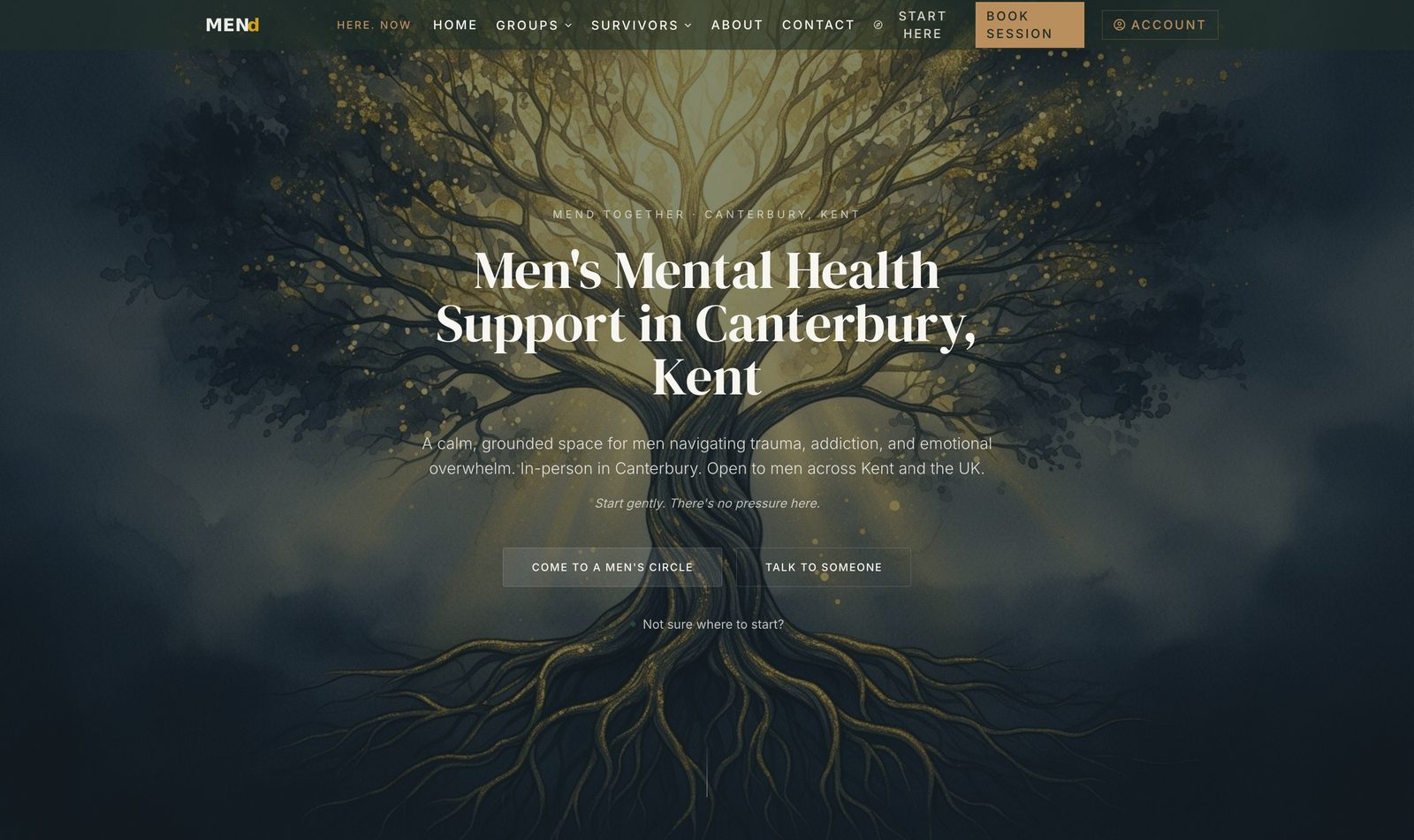
A men's mental-health platform that quietly reaches the men who need it most.
MENd Together is a CIC supporting men with trauma and emotional recovery. We rebuilt the digital surface from the ground up so the right men could find it on Google, trust it on first visit, and reach out without friction.
Read the case studyFree Business Growth Report
Discover how visible your business really is.
A personalised report on your local demand, visibility opportunities, growth barriers and revenue potential — built specifically for your business.
- Local demand
- Visibility opportunities
- Growth barriers
- Revenue potential
- Recommended next steps
The About page nobody reads (and why it matters)
About pages are weirdly important. Visitors don't always read them, but they look at them. They check whether real people exist behind the business. They check whether the story makes sense. They check for a postcode, a phone number, a face. A well-written About page won't on its own generate enquiries, but a bad one will quietly lose them — and you'll never know.
Security signals that quietly convert
HTTPS is the bare minimum. Beyond that: a visible privacy policy, GDPR-compliant cookie handling, a real registered office, a registered company number where applicable. Visitors don't usually read any of these. They notice their absence. Each one is a quiet little assurance that the business is real, accountable, and likely to still exist next year.
The response time signal
A small line near the contact form — "We typically respond within one business day" — measurably improves conversion. It costs nothing to add and reframes the act of enquiring from "I'm sending this into the void" to "I'll hear back tomorrow." Honour it consistently and you've built a small, durable trust loop.
The trust audit
Go through your website with one question: at each scroll, what's the strongest trust signal visible? If the answer is ever "nothing," that's where you're losing visitors. The fix is rarely dramatic — a testimonial added here, a real photograph there, a postcode in the footer, a privacy policy linked from the contact page. Each small addition compounds.
The deeper structural reason most websites fail to convert despite looking fine is explored in our pillar article on why most business websites don't generate enquiries.
Free Business Growth Report
Discover how visible your business really is.
A personalised report on your local demand, visibility opportunities, growth barriers and revenue potential — built specifically for your business.
- Local demand
- Visibility opportunities
- Growth barriers
- Revenue potential
- Recommended next steps
Read next · Websites
Keep reading


Related services