
Why Location Pages Matter For Rankings
A homepage that mentions Canterbury once is not a Canterbury website. Google needs evidence — and the evidence comes in the form of dedicated pages built around specific places.
A homepage that mentions Canterbury once is not a Canterbury website. Google needs evidence — and the evidence comes in the form of dedicated pages built around specific places. Most small businesses skip this step entirely, and quietly lose their entire local market because of it.
What a location page actually is
A location page is a dedicated URL focused on one specific area you serve. /therapy-canterbury. /plumber-maidstone. /accountant-tunbridge-wells. Each has its own H1, intro, services list, testimonials, FAQ, and call-to-action — all tuned to that location.
Why they outrank homepages
Google's relevance scoring asks: "When this person searches 'therapist in Maidstone', which page best answers that?" A homepage answers it 30%. A page literally titled "Therapy in Maidstone" answers it 90%. The dedicated page wins, even from a smaller domain.
The structure that works
H1 with location and service. Intro paragraph that confirms you serve that area specifically. Services list. Testimonials from local clients (if you have them). A short FAQ addressing local-specific questions. A clear CTA. Internal links back to the main service page and to neighbouring location pages. 600-900 words is plenty.
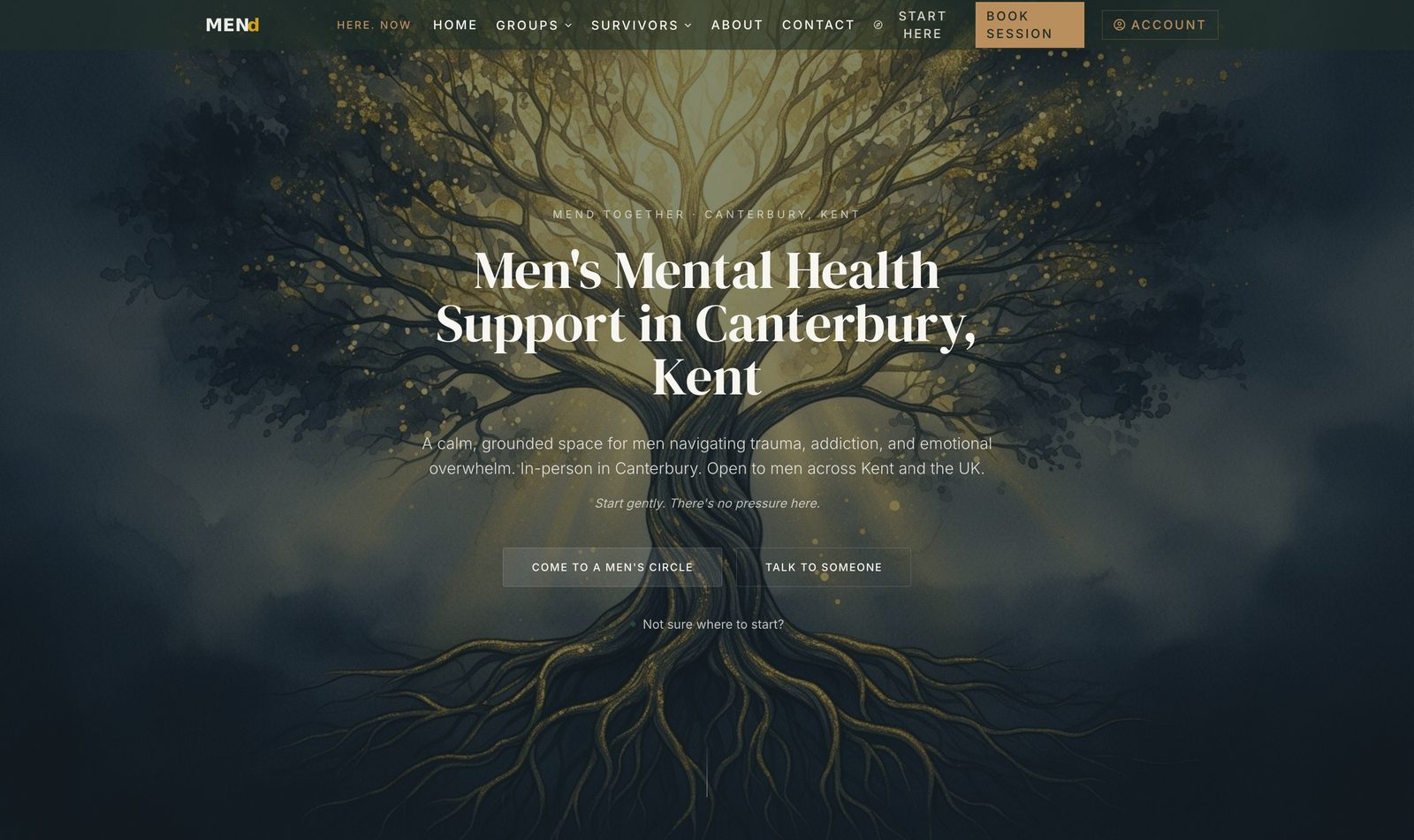
A men's mental-health platform that quietly reaches the men who need it most.
MENd Together is a CIC supporting men with trauma and emotional recovery. We rebuilt the digital surface from the ground up so the right men could find it on Google, trust it on first visit, and reach out without friction.
Read the case studyFree Business Growth Report
Discover how visible your business really is.
A personalised report on your local demand, visibility opportunities, growth barriers and revenue potential — built specifically for your business.
- Local demand
- Visibility opportunities
- Growth barriers
- Revenue potential
- Recommended next steps
Avoid the duplicate-content trap
The temptation is to build 20 location pages by changing only the place name. Google sees through this immediately. Each page needs genuinely unique content — different testimonials, different local references, different opening, slight variation in FAQ. Templates are fine; copy-paste is fatal.
Cover satellite areas, not just the main city
A Canterbury business should have pages for Canterbury, Bridge, Sturry, Whitstable, Herne Bay, Faversham. Each one captures intent that the homepage cannot. Volume per satellite is smaller — but competition is also lower, and intent is sky-high.
Internal linking ties it all together
Each location page links to a sibling location page and to the parent service page. The cluster of pages reinforces each other. Google sees a coherent local authority structure rather than isolated thin pages.
For the strategic context behind this, our pillar article on how local SEO helps businesses get more customers is essential reading.
Free Business Growth Report
Discover how visible your business really is.
A personalised report on your local demand, visibility opportunities, growth barriers and revenue potential — built specifically for your business.
- Local demand
- Visibility opportunities
- Growth barriers
- Revenue potential
- Recommended next steps
Read next · Local SEO
Keep reading


Related services