
The Complete Guide To Local SEO For Small Businesses
A practical, end-to-end guide to local SEO for small businesses that want a structured plan rather than another list of tips. Read once, work through it over a quarter, and you'll be ahead of 80% of your competitors.
A practical, end-to-end guide to local SEO for small businesses that want a structured plan rather than another list of tips. Read once, work through it over a quarter, and you'll be ahead of 80% of your competitors.
Phase 1 — Foundations (week 1)
Claim and verify your Google Business Profile. Set the correct primary category. Add a complete description, hours, services, and at least 12 high-quality photos. Verify the business address. This step alone usually moves rankings inside two weeks.
Phase 2 — Citations and consistency (weeks 2-3)
Audit every directory listing for your business — Yell, Yelp, industry directories, local council. Standardise the name, address, phone number (NAP) so they match exactly across every listing. Inconsistencies are an under-rated drag on rankings.
Phase 3 — On-page service and location pages (weeks 4-6)
Build out dedicated pages for every service you offer crossed with every primary area you serve. "Therapist Canterbury", "Counselling Maidstone", "Couples therapy Tunbridge Wells". Each page gets its own H1, intro paragraph, services list, testimonials, and call-to-action. Generic homepages cannot compete with hyper-local pages.
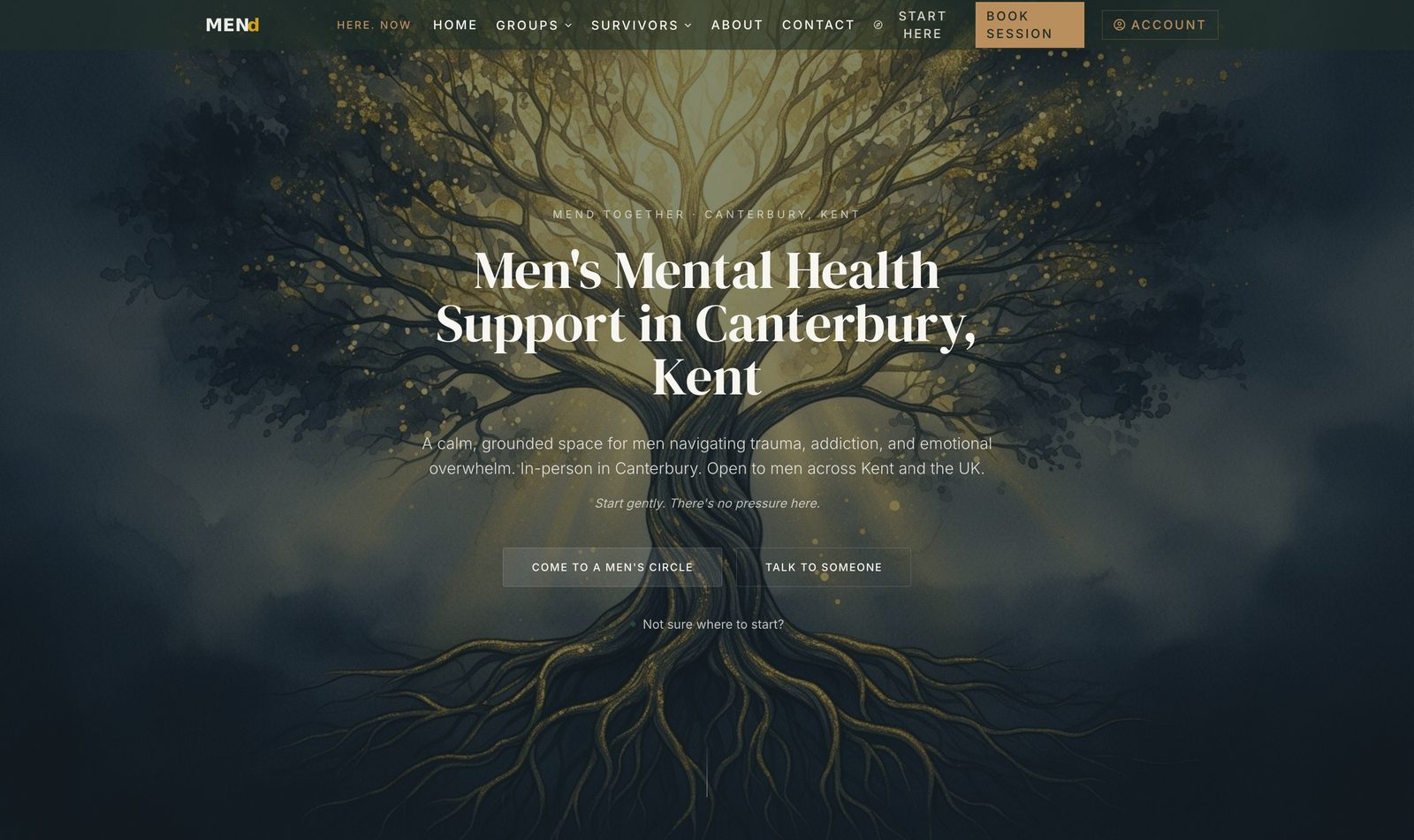
A men's mental-health platform that quietly reaches the men who need it most.
MENd Together is a CIC supporting men with trauma and emotional recovery. We rebuilt the digital surface from the ground up so the right men could find it on Google, trust it on first visit, and reach out without friction.
Read the case studyFree Business Growth Report
Discover how visible your business really is.
A personalised report on your local demand, visibility opportunities, growth barriers and revenue potential — built specifically for your business.
- Local demand
- Visibility opportunities
- Growth barriers
- Revenue potential
- Recommended next steps
Phase 4 — Reviews engine (ongoing)
Set up a process. Every customer gets a request for a review at the moment they're happiest — usually right after the service is delivered. A short personal message with a direct review link converts 2-3x better than a generic email. Aim for one review per week, every week, for the first six months.
Phase 5 — Content cadence (months 3-6)
Publish one substantive article per fortnight on topics local customers actually search for: questions, comparisons, "near me" content, problem-led articles. The goal is topical authority — Google needs to see that your site is a serious local resource, not a brochure.
Phase 6 — Internal linking and structure
Connect every new page back to its parent service page, location page, and your homepage. A coherent internal-link map helps both Google and visitors navigate your site, and lifts every page in the cluster.
Phase 7 — Measurement and iteration
Track local rankings monthly for your top 10 keywords. Track Google Business Profile insights weekly. Track form fills and call volume from organic traffic. Adjust based on what moves. Most local SEO programmes plateau because nobody reviews the data and chooses what to push next.
Phase 8 — Compounding
By month nine, the work compounds. Reviews accumulate. Pages mature. Citations tighten. Rankings climb steadily and the cost-per-enquiry from organic search drops below every other channel you're running. Most local businesses never get here because they stop at month three.
For the strategic backdrop, see how local SEO helps businesses get more customers.
Free Business Growth Report
Discover how visible your business really is.
A personalised report on your local demand, visibility opportunities, growth barriers and revenue potential — built specifically for your business.
- Local demand
- Visibility opportunities
- Growth barriers
- Revenue potential
- Recommended next steps
Read next · Local SEO
Keep reading


Related services